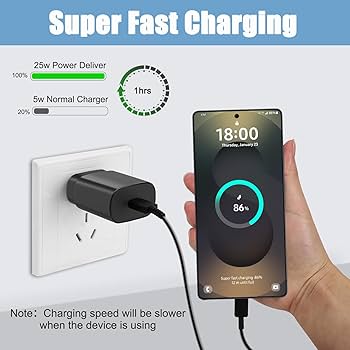
Understanding Fast Charging Technologies: How They Work
Fast charging technologies have revolutionized the way we power our devices, from smartphones to electric vehicles. But how exactly do they work? At their core, these technologies utilize advanced algorithms and optimized hardware to increase the amount of electrical current flowing to the battery in a shorter amount of time. This is achieved through various methods, including higher voltage charging, increased current flow, and improved thermal management. For instance, many modern chargers use techniques such as pulse charging and smart communication between the charger and the device to adjust the charging rate based on the battery's needs, thus preventing overheating and prolonging battery life.
One of the most notable fast charging standards is Qualcomm's Quick Charge, which allows for charging speeds of up to 100W. Other prominent technologies include USB Power Delivery (USB PD) and Samsung's Adaptive Fast Charging. Each of these standards offers unique advantages, allowing consumers to charge their devices more efficiently. Typically, a fast charging enabled device will display a charging status that includes estimated time to full charge, which can be significantly less than traditional charging methods. As more manufacturers adopt these technologies, understanding how they work and their benefits becomes essential for consumers who wish to maximize their electronic devices' performance.
Counter-Strike is a popular tactical first-person shooter game that has garnered a massive following since its release. Players are divided into teams, typically terrorists and counter-terrorists, and engage in objective-based gameplay. The game has a rich history and has evolved through various iterations, becoming a staple in competitive gaming. For those looking to enhance their gaming experience, consider checking out the Top 10 magsafe chargers to ensure your devices are always charged during long gaming sessions.
The Future of Charging: A Deep Dive into Lightning Fast Solutions
As technology progresses, the quest for lightning fast charging solutions continues to reshape how we power our devices. With the proliferation of smartphones, laptops, and electric vehicles, the demand for quicker and more efficient charging methods is rising. Innovations such as supercapacitors and solid-state batteries are at the forefront of this revolution, promising to significantly reduce charging times from hours to mere minutes. For instance, researchers are exploring nanotechnology to enhance the conductivity of battery materials, potentially allowing devices to be charged in just a fraction of the time currently required.
In addition to hardware advancements, software optimization plays a crucial role in achieving optimal charging speeds. Intelligent charging algorithms can now assess the power needs of devices in real-time, enabling them to draw energy more efficiently. This innovation not only improves charging times but also extends the overall lifespan of batteries, making them more sustainable. As we look ahead, the fusion of these technological advancements holds the promise of a future where high-capacity charging stations are as commonplace as gas stations, transforming our approach to energy consumption and making the concept of lightning fast charging a reality.
Is Your Device Compatible? Exploring Fast Charging Compatibility and Standards
In today's fast-paced world, the importance of fast charging compatibility cannot be overstated. Many users find themselves asking, Is your device compatible? To ensure optimal charging speeds, it's essential to understand the different fast charging standards available, such as Quick Charge, USB Power Delivery (USB PD), and Apple's Fast Charge. Each of these technologies has its unique requirements and benefits, making it crucial for consumers to match their devices with the appropriate charging accessories. Failure to do so can result in slower charging times, which can be a significant inconvenience.
When exploring fast charging compatibility, it's also important to consider factors like the device's battery capacity and the power output of the charger. For instance, a fast charging compatible smartphone may not charge quickly if paired with a low-output charger. To help you navigate this landscape, here are a few key points to check:
- Verify the charging standards supported by your device.
- Use certified cables and chargers for optimal performance.
- Check your device settings to enable fast charging features if necessary.